
The Grounding Sheet
Janine Wyborn on Building MACH2T with her Husband
Written by Siân Jones
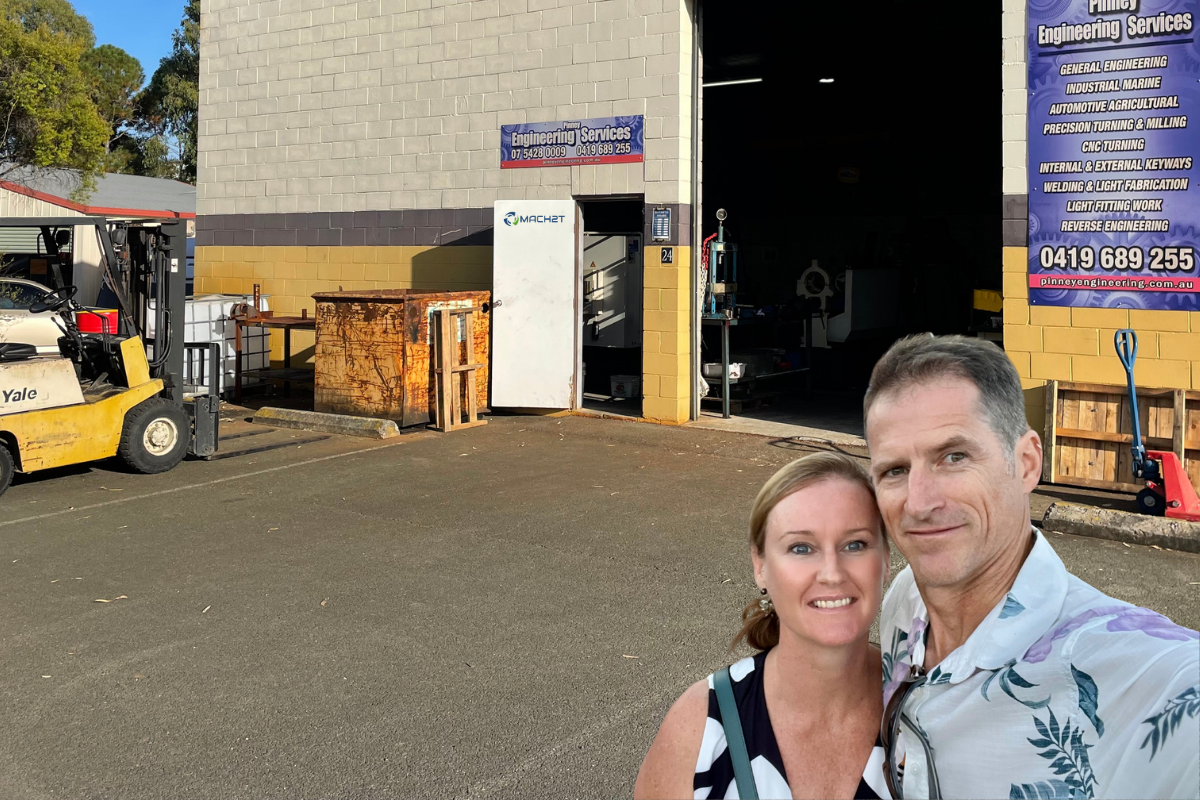
Imagine you’ve had an impressive career of your own. You’ve worked with global organisations, coached executives, delivered large-scale projects, studied human behaviour, led people through change, and built a professional identity grounded in your own capability.
Then you make the decision to formally join your husband in his business after years of being the quiet supporter, sounding board and strategic partner in the background.
Suddenly, it feels like the world no longer sees your value in the same way.
You are the wife.
The admin person.
The helper.
Somehow, the lesser being.
This is something both Janine Wyborn and I have experienced.
Society can be biassed, even reductive, about the role of a female partner in a business, especially when the male partner holds the more visible, front-facing role. The assumption is rarely spoken plainly, but it is often felt immediately: he must be the business; she must be helping him out.
At networking events, Janine no longer leads with the fact that she works with her husband, John. It isn’t because she’s ashamed of it. Rather, she’s trying to avoid what typically comes next.
As she told me, when she says she works with her husband, the response is almost instant: “Oh, you just do the office work.”
As a person who has worked across learning and development, project management, HR, executive coaching and business strategy, that assumption cuts deeply.
“I would go home feeling kind of heartbroken,” she said.
Not because she needed external validation, but because the reaction erased something important. It erased the experience, the thinking, the skill and the strategic contribution she brought to the business. It reduced her to a relationship title instead of recognising her as a professional in her own right.
The irony is that when speaking with Janine it becomes clear very quickly that MACH2T is not simply John’s business with Janine in the background. It is a business strengthened by the fact that John and Janine run it together, and that they think differently, contribute differently, and respect each other deeply.
A Business Born from Technical Mastery, Trauma and Timing
John started MACH2T in 2018 after more than 20 years in the power industry. A mechanical engineer by trade, he had worked globally across heavy industry, from turbochargers to turbines. He was well recognised for his unique ability to blend human skills with solid technical expertise, a combination many engineers are missing.
However, the decision to step out on his own was not simply a commercial move. It came after a deeply difficult period in his life.
Within six months, John lost his uncle, his best friend and another close school friend to suicide. Understandably, this shook him and forced some existential questions. At the time, Janine was also navigating family illness and the family moved back to Queensland to be closer to loved ones.
John knew the power industry like the back of his hand and the industry highly respected him. In fact, energy giants were regularly calling, asking him to bring a team and work for them.
For a long time, he resisted.
Janine could see the opportunity. She had spent years as his sounding board, or, as she describes it, his “grounding sheet.” She was the person he bounced ideas off, the person quietly coaching him, encouraging him, helping him see what he was capable of. Her encouragement contributed to him finding the self-belief to go for it.
John pulled a team together for a major job in South Australia. It was complex, challenging and high pressure. They brought it in early and without issues, and that lit the fire. From there, MACH2T began to grow.
The Grounding Sheet
I love Janine’s phrase “grounding sheet” because it captures something many people miss about businesses built by couples or families, especially those where one person is more prominent publicly than the other.
The person in the background is rarely passive. Not only are they playing a technical role within the business, they may also be holding the emotional steadiness, strategic perspective and self-belief of the person out front.
They are likely to be the one listening late at night. Asking the hard questions other team members won’t dare to ask. Challenging assumptions. Encouraging action. Helping translate instinct into strategy. It’s not always seen, but it is always fundamental.
In the case of MACH2T, Janine’s “grounding” also comes from the different skills she brings to the company.
While John understands the industry and has the technical expertise, they both can see a macro vision.
Nevertheless, it’s Janine who can translate that into action.
“He sees the outcome, but I see the steps on how to get there,” she explained.
She understands behaviour, communication, culture, learning and capability. She can see what the business needs and when, where recruitment needs to be handled with care, and how to build systems around people rather than expecting people to survive broken systems. She can jump from a strategy session into fighting a fire when their accounting software has gone offline.
What she does isn’t “office work” - it’s leadership.
A Vision Bigger than the Next Project
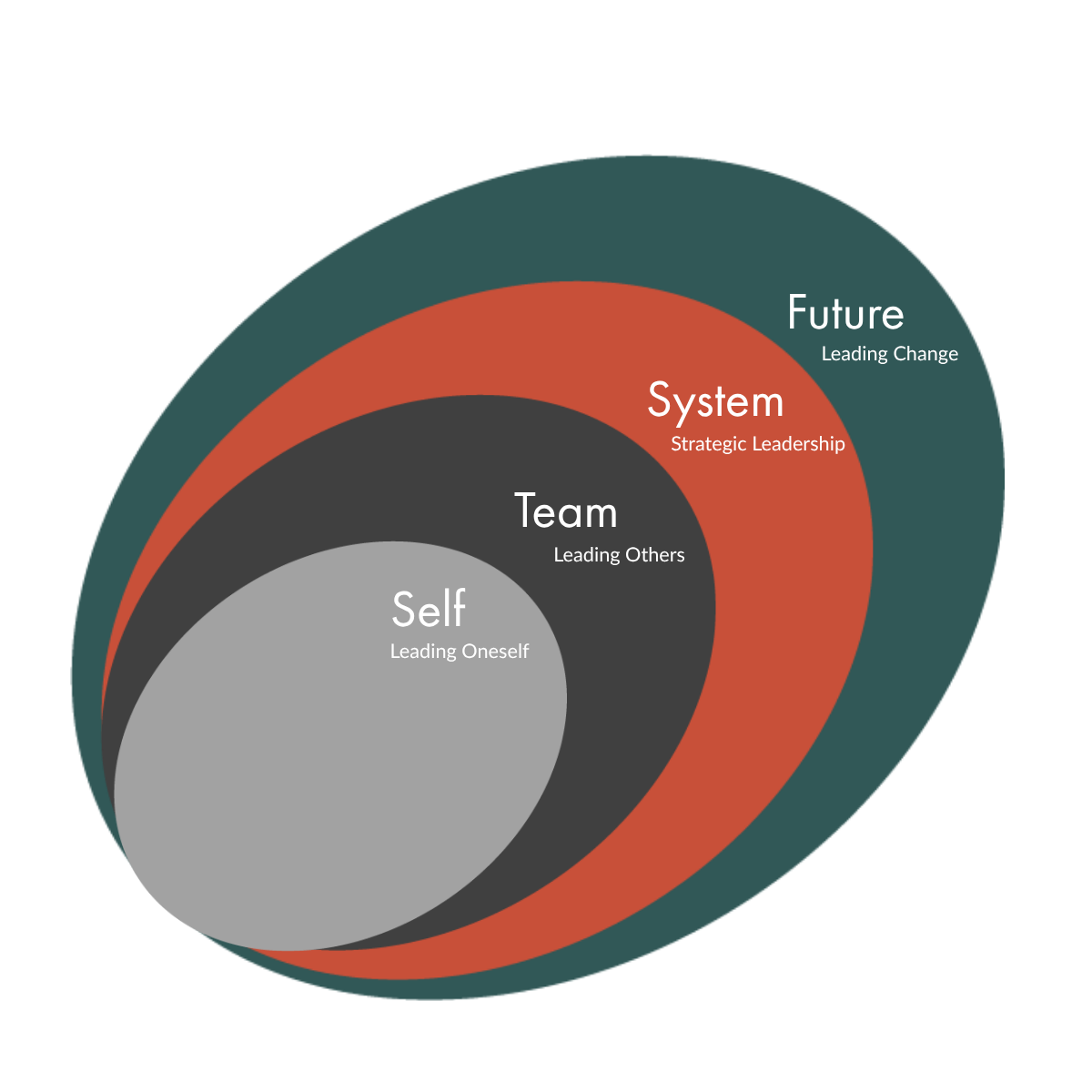
The Co-Founder Couple’s Model for Leadership
When I’m helping leadership teams, I often talk to them about the layers of leadership, from leading self to teams to the business and then to leading the future, the community and their the legacy. Most leaders understand the concepts of leading themselves, their teams and their business, and are satisfied with that. Talking about growth in terms of revenue, headcount, market share or next year’s targets is enough for them.
Janine and John are thinking about growth as a system that includes short to long term goals, as well as financial, human and industry returns.
One of their biggest ambitions is to help rebuild technical capability in Australia.
They see a gap emerging in apprenticeships, engineering and practical industry knowledge. Experienced capability is retiring. Younger tradespeople and engineers are coming through systems that, in their view, do not always equip them with the practical skills required on complex industrial sites. It’s more theoretical than practical.
Janine talked about wanting to build apprenticeships with better outcomes and broader exposure. Their long-term goal is to push toward degree apprenticeships in Queensland, where people can combine engineering education with practical, hands-on application.
The aim is not simply to train people for MACH2T. They want to lift capability across the industry.
Janine described the dream clearly: one day, when someone applies for a job and the employer sees they completed their apprenticeship with MACH2T, the response is immediate trust.
“We’re just taking you on,” she said, because the employer would know what that training meant.
That vision is about leading the future. Personally, I love it.
The Communication Lesson
When I asked Janine what makes working with John work, her answer was clear: “super open, transparent communication.”
John, she said, can go into what she calls “CEO mode.” He is thinking about a lot of things, but he does not always verbalise how it is all going to work. When he does communicate it, he may only give part of the picture.
That leaves the rest of the team trying to decipher the rest.
This became especially apparent after the acquisition of their engineering workshop. Everything became intensely busy. John had ideas about where he wanted to take the business, but a lot of it was only in his head. His intention was well-meaning. He did not want to burden Janine with more than she already had on her plate, but the impact was the opposite.
Janine was left thinking, I’m not clear on what direction I’m supposed to take this.
So, she pushed for the conversation and told him plainly that she was not following where he was going and that the burden shouldn’t be solely on his shoulders. They white-boarded the vision and made it visible, which created space for more questions, discussion, and ultimately, greatly clarity.
This is such a common pitfall of working with someone that you love.
One person thinks they are protecting the other by holding things in. The other person experiences that as confusion, exclusion or lack of trust, and if these concerns don’t come to the surface, cracks can begin to appear.
Listening to Janine, it struck me that the lesson isn’t only to “communicate more.” It’s to dig below the decision and understand the thinking behind it, so there is deeper connection. This way, when the team starts asking Janine questions, she’s confident that the decisions she makes will be aligned with the original vision. This also saves time, as you’re not just waiting for answers from the front person.
The Real Partnership
At the end of our conversation, I asked Janine what advice she would give to other people working with someone they love.
Her answer was beautifully simple.
Set clear boundaries. Have open conversations. Stay calm. Keep the emotion in check.
She made the point that when we love someone deeply, we can sometimes lash out in ways we would never allow ourselves to do with a colleague. Because the love is unconditional, we assume forgiveness will be too. This absolutely resonated with me. I’ve been there, expecting understanding for an outburst that would never have flown with another colleague.
When you work with your husband, wife, child, sibling, parent or best friend, you still have to be mindful and choose respect, even when the relationship gives you more room to be messy. In many ways, it’s even more important, because there’s too much caught up in the relationship for you to be careless with it.
What I found most compelling is John and Janine’s complete respect for one another and willingness to acknowledge each other’s strengths. They will also name any friction, put boundaries in place, and are committed to transparency with their communication.
Most of all, it’s very clear to me that Janine is not “just the wife” or the “office person.” She’s authoritative, intelligent and in control.
A strategist. A culture builder. A translator of vision into action. She is most certainly leaving her own leadership imprint on the business.
It’s sad to me that bias still exists in our society. That a woman who works with her husband, might not always be seen as an equal in the eyes of others. That instead, she feels she has to minimise part of her identity, or leave her relationship out of the conversation, in order to be viewed as credible in her own right.
The irony, of course, is that women like Janine are a big reason the whole thing is standing upright in the first place.